Showing posts with label self-sustainability. Show all posts

Friday, 30 August 2013

Eating from the garden in late winter

Colour in the winter garden - beetroot, calendula and brocoletti flowers
Two years ago, if someone had told me that I would be able to eat veggies from my garden all through winter, I wouldn't have believed them. In the past, the only thing harvested in my winter garden was the silverbeet that had grown into a massive plant. I still have a long way to go in my winter gardening (no lovely heads of purple broccoli or cauliflower for us still), but now I can see the possibilities!

Snow peas in hanging baskets - snail and duck proof!
This winter promised lots of lovely silverbeet and peas, but my ducks put a stop to that. Instead, we've eaten great heaps of wombok cabbages, enough lettuce and rocket for salads and burgers, good supply of carrots, baby beets, some lovely stalks of brocoletti, the odd bak choi and masses of crisp and delicious celery. It's all been topped with the herbs that have kept going, and served with some of my summer preserved and frozen veg. It's not enough veg for us - I've still had to buy the odd pumpkin, frozen peas and bags of potatoes - but every day we eat something from our garden, and that feels very good indeed. 

Broad beans in flower promising more fresh veg soon.
Last night was a good gardeners meal. I made rosti with potatoes and a selection of fresh turnips, carrot, celery and herbs from the garden. They were served with new season eggs from our chooks (thanks girls!), sourdough toast, tomato chutney and the first few snow peas from my hanging baskets (ie. duck proof pea gardens!). It's a simple meal, but it tastes so good to eat all of those home grown and homemade items, knowing exactly what went into everything on the plate. 
Delicious!

With a bit of luck (and my planning paying off) and we'll continue to eat from the garden all through spring to make it a whole 12 months of garden consumption - yay!

Pretty purple and white turnip tops.


Tuesday, 30 April 2013

Around the Garden right now

We're about to enter the third calendar month of autumn. You wouldn't guess it by looking at my tank levels or popping a spade into the ground - it's still way too dry, but the crisp mornings and the need to wear a jumper and socks tells me it really is.

It's dry, but we've had some rain. Weed seedlings are starting to show their heads in the 'lawn' areas and while my plants still look forward to a drink of carted grey water, they would survive without it.

This autumn I feel like I am living in and for the garden. I've spent countless hours preserving the fruit crops we grew or were gifted and have been enjoying celery, carrots, lettuce, herbs, tomatoes (yes still), silverbeet and herbs in our meals. I can see that there will be a small gap in harvest soon though, and will look into fixing that gap next year.

I'm growing seedlings of artichokes, pak choi, kale and purple sprouting broccoli, some more successfully than others, but I'm learning more each day, and getting better gradually at this growing from seed business.


Seedlings on the verandah.
Planted in the garden over the last month or so, I have broad beans, peas, sugar snap peas, snow peas, brocoletti, carrots, lettuce, wong bok cabbages, beetroot, garlic (two varieties), red onions, spring onions and carrots.


Seedlings doing well in the garden under a canopy of chicken wire to keep off cats and ducks
Around other parts of the garden, I've planted another olive tree, an almond tree, a mandarin and another feijoa. I've also added more herbs to my potted herb garden, helped 'self sow' silverbeet and calendula and sprinkled seeds of chamomile.


Garlic doing very well.
Our Muscovy ducks, Daisy (who may be Donald) and Peach, follow me everywhere in the front yard, chatting away and hoping I'll throw a snail or two their way. I've learnt that they love lettuce and beetroot leaves, and therefore, if I want to grow them for us to eat, they'll need to be planted beyond their reach.


I was sitting on the verandah writing this, so they joined me!
Also in the front, I'm working on a spot of pruning and taming the grass runners that are doing extremely well and reeking havoc around trees.

Out the back, Buddy is my constant companion as I peruse the works in progress. It looks messy now, but soon, our backyard area will be split by a fence. Inside that fence will be a water tank on a stand, the stand will become a shelter for our miniature goat, Jorgie, and her kid (which she should be getting pregnant with about now) when they come to live with us in September.

Behind Buddy, you can make out the holes for the tank stand and the pile of dirt we've dug out so far.

Next to the goat yard will be a new shed. The shed will be for feed storage with a section set up as my dairy. And all the way around the fence, I'll be planting goat friendly plants such as roses, lavender, silverbeet, wormwood, nasturtiums, chamomile and rosemary. These fragrant and pretty plants will look and smell lovely in the garden that will be below our washing line, and as they grow tendrils through the mesh wire of the goats fence, they'll be able to nibble away.
Introducing Jorgie, our miniature goat who will continue to live on the stud farm in Portland until she's had her kid.

The chooks are doing well too, they're laying a bit less now, but I still bring in eggs each day. They are enjoying scratching through weeds, devouring the sprouted wheat feed and picking at their garden which I planted back in march in an old guinea pig hutch so they can pick, but not destroy, the silverbeet, nasturtiums and calendula growing in there.


Standing on their very own garden.
So that's what's happening around here. On Friday, we'll take delivery of the tank and fencing materials so the next part of construction can happen. I'll keep you updated!


Sunday, 28 April 2013

Not a butcher

Remember these guys?

Well they grew up. They grew up into beautiful big roosters of various colours. They were quite friendly and lived peacefully in a bachelor coop with younger roosters that have gradually come to join them. I enjoyed raising them, but as was always the intention, the time came for them to be processed into healthy, lean, almost free range and extremely low food miles meat for our freezer.

We've processed a few batches now, and we're getting better at it.  Each time, we learn something new and do the job cleaner, quicker and with less waste.

The adjustments we made to the process this time were to put each of the roosters (three this time - two of ours and a donated Rhode Island Red), into an empty feed bag each when we caught them. Previously we've just put them all into a box and once we had one escape and had to chase him round the backyard - not conducive to stress free meat! By placing them in the dark bags, they stayed still and calm until their turn came. We only ever catch then when we are completely ready, so they are in the bags a maximum of 10 minutes.

The other change was to add a few drops of dish detergent to the scalding water we use before plucking. I don't know if it helped - the first two were relatively easy to pluck, but the third one wasn't. I think the water was too cold, but basically, he ended up skinned instead of plucked. This seemed like a bad thing, but ended up good.

Now I'm not a butcher, and I actually don't like handling meat, but I believe humans should be omnivores, I believe we should eat humanely raised and killed meat and I am the only one in our house likely to do any butchering.  So I set to preparing our roosters for the freezer. Previously, I've just cleaned them all up and frozen them whole. And previously, we've fed the necks to the dog, but all the feathers, guts etc have been thrown out. Not this time. This time, we reserved the necks for Buddy, I have frozen the livers in a container to become pâté when we have enough (I'll add more each time we do this) and the guts and feathers were buried near one of our fruit trees to act as a blood and bone fertiliser.

The rest of the chicken, I brought inside. The Rhode Island Red was plump and lovely looking, so after a clean, he was left in tact to become a roast. The other two were not so 'roast chicken' looking, so I had a go at jointing them. I can't say I ended up with the neatest cuts of meat, but I did put a bag of skinless/boneless breast fillets, a bag of skinless/boneless thigh fillets and a bag of legs and wings into the freezer. Then, not wanting to waste anything, the carcasses went into the crock cooker with a couple of litres of water for two days. Yesterday, I strained it, picked the remaining meat from the bones and gave the bones to the chooks to pick at (that made me feel weird, but I didn't want to just throw them out! Besides, they do eat meat scraps from the chook bucket usually....).

The scraps of meat were added to a pasta dish last night, and the stock filled three large mason jars, which I bravely pressure cooked using my pressure canner for the first time. I was petrified of using it, but in the end, it wasn't too hard, and I now have three meals worth of stock added to my overflowing pantry.

So, despite the fact that I'm not a butcher, I managed to grow healthy, happy roosters and turn those three roosters into at least 10 meals for our family, plus bones for the dog and pâté. And not one bit of those roosters went to waste, or left the property.

Happy mini farmers.

Wednesday, 17 April 2013

DIY chook food

Up until recently, we fed our chooks on pellets. Layer pellets for the main flock, and pullet starter/grower for the young. But with so many chooks now hanging around, and my ever present 'could we DIY this?' attitude, I began looking for an alternative.

I discovered fodder systems and was pretty impressed. A fodder system is basically growing sprouts for your livestock. You can grow all sorts of things, but wheat is readily available and sprouts well, so that's what I use. By sprouting the grains, you change the chemical makeup of the material, thereby, increasing the available nutrients for your animals. You also increase the quantity of food, and in doing so, feed your animals less and save money!! As added bonuses, you know exactly what you're feeding your animals (and therefore what you're eating in your eggs/meat) and by buying less bags of pellets, you save on packaging. Hooray!

Wheat grains contain Vitamin B,C and E, Calcium, Iron, Magnesium, Pantothenic Acid, Phosphorus, Amino Acids.  By sprouting the grains, your animals get all of that PLUS vitamins A and K, Chlorophyll, Lecithin, Potassium and trace elements.  And the protein value of the feed goes from 10% to 30% (reference).
 
Lots of people grow fodder, if you want to do it, hunt around the Internet and read some other blog posts. But here is how we I do it.

For one smallish flock of birds (ie. for either my 7 roosters and 2 ducks of my 10 layers), a tray of food a day (plus some other things -see below) is a good start. So for each flock you need to set up a system. Each system needs a container with a lid (ice cream containers work well), 7-9 kitty litter trays (or similar), some old net curtains and somewhere to keep your system.
My fodder system is made of lots of bits of recycled timber and sits on the verandah.
Total cost for set up was about $30

Storing your system on open shelves is a good idea as the water used to water the top trays trickles down and waters the trays below.  You could use wire shelves from the shop, or if, like me, you believe things should be as cheap and recycled as possible, grab some pallets and scrap timber and custom make one!
I had helpers while making my pallet shelving system :)

Take your kitty litter trays and drill drainage holes in the bottom of them. Make sure you put in quite a few, but keep the holes smaller than a grain of wheat! I experimented with how many trays and found 8 is good. Apparently the fodder has the most nutrients between day 6 and 8 and after that it gains nothing and may start losing nutrients as the grass grows.

Now to grow the fodder. On day 1, put two cups of wheat into your lidded container. Cover it with water. After 8 hours (or overnight), tip the contents into your first litter tray and spread out the soaked grains. Repeat this step every day.  Use your net curtain to drape over your trays or the sparrows will find them and get very fat on your efforts (yep, speaking from experience!).

Each day, water your trays to keep them moist, but not soggy. In cool wet weather, I find once a day is enough, but on hot dry days, you need to water more often.

Day 1: Soaked grains
Day 3: Starting to grow roots
Day 5: A nice green flush
Day 8: Ready to feed!

Try not to disturb your growing wheat - it slows down the growth and you end up with messy crops. By day three you will see the wheat layer is starting to bulge and "puff" us as the roots grow. By day six, things are turning green. And by day 8 you'll have a lovely grassy crop. Keep away any wheat grass smoothie drinking folk and prepare to feed out your first crop!

The wheat will have grown into a slab of roots, shoots and grainy bits. Break it up and feed it out. Different animals treat it differently, but they all seem to like it.

I started with one system and have just started a second. Once we get our goats, I'll probably do three. And remember if you have other herbivores (guinea pigs, horses, rabbits etc), this makes a good feed for them too.

I do supplement the feed. The ducks free range and pig out on snails and slugs and the occasional scrap. All of the chooks get kitchen scraps. The meat chickens also get a whey and oat porridge (or porridge and yoghurt) to fatten them and the layers get a handful of layers pellets and shell grit. I hope to get rid of the layers pellets eventually though and replace the necessary nutrients in them with more home grown and natural foods.

Do you grow or cook for your animals?  Would love to hear about it!  And if you have any questions about this, ask away!


Wednesday, 27 February 2013

A whole suburb of sustainable blogs!

I love writing my blog about our green and homemade life, and I love reading blogs about the sustainable journey that other people are on.  And now, there is a place where we're all coming together, lots and lots of links to sustainable living blogs of all shapes and sizes!  I think I'll be doing a lot of reading :)

I've put my link over there.  If you're keen to read more sustainable living blogs, go check it out:

Sustainable Suburbia: Striving for a lower impact lifestyle. Join the Sustainable Living Blogs Linky Lists

Wednesday, 20 February 2013

Sweetcorn and veggie garden plans

I harvested all of our sweetcorn this week.  The whole lot was picked for a few reasons:

1. Most of it was ready
2. I can't water all of my veg beds anymore - there just isn't enough water
3. I need to start preparing beds for the winter crops

I've grown sweetcorn a few times now.  The first time was beginners luck and, though I didn't plant much, I ended up with lots of perfectly formed cobs.  The second time was a complete failure, resulting in about four poorly formed cobs.  This year was somewhere in the middle. I had a few perfect cobs, lots of poorly pollinated cobs (despite my efforts to hand pollinate) and some that just didn't form at all.  So my resulting harvest needed a bit of sorting.
Sorting the harvest
I was able to serve us up a meal of perfect corn-on-the-cob.  It was the best we'd ever tasted!  So sweet and juicy - yum!

I was also able to serve us a stir fry with "baby corn" using the cobs that were immature and didn't form.  The boys were thrilled that I'd been able to grow one of their favourite veggies, but disappointed that "that was it" and that it was actually an accident!

And with all of the cobs that hadn't pollinated properly, I cut the kernels from the cobs, blanched them and froze them for use when I can't get cheap, fresh corn.

You know, we used to eat so much frozen corn and peas, I used to buy a bag of each weekly!  It was all the kids would eat in terms of veg, and it was so eeeeeeaaasy.  I would "cook" a bowlful to serve as a side dish, or chuck it into a pasta or rice dish.  These days, our veggie garden is so much more productive and the kids are much more experimental with veg (mostly because they don't have a choice!) that I barely buy frozen veggies.  I've also stopped buying any frozen veg that isn't Australian grown (mostly frozen peas, corn and potatoes are grown in New Zealand, which just seems sad to me), and so I have to buy a more expensive brand, and I'm less inclined to use it quickly.

So, now I have an empty garden bed and it is time to start preparations for the next big round of plantings.  Until last year, I pretty much didn't bother with a planting for winter veg, and then last year, I left it too late.  So this year, I have a pad and pen and lots of planting charts and I'm planning well. 

I intend to grow beetroot, purple sprouting broccoli, carrots, lettuce, coriander, wong boks, silverbeet and snow peas as our basic veg for the cooler months.  I'll also be putting in garlic and onions.  Two of my big veg beds will get a green manure treatment - soybeans in one and broad beans in the other.  The beans will give the soil a good dose of nitrogen and I'll also be able to harvest the beans - some for us and some for the chooks.

After such an incredibly dry summer, all of my beds also need a boost of organic matter, so I'll be adding in compost, horse manure (its not the best manure as it often results in weed growth, but its easy for us to come by) and also things like the corn stalks which I will bury beneath the soil to break down on their own. 

Some of the summer crops still have a month or so to go, but that's OK, those that are done will be clearing the space for the first plantings, and the plants that need to be sewn in cooler weather will go in later.

I plan to try to grow most of my new plants from seed again, and have ordered more seed for those I'll be planting.  Some things will be planted directly in the garden, and those that need to be planted in seed trays will be planted in my cold frame (the window in top will be replaced with shade cloth to make it a shade house).

So much to do, but I'm really looking forward to continuing to produce 90% of our families vegetables through the winter months.

Thursday, 14 February 2013

Loving the sunshine

Happy valentines day folks. Do you celebrate valentines day in your home? So close to our  wedding anniversary, we have never bothered, but we always say it, and this morning I decorated Stu's morning cuppa with a heart and served my little loved ones heart shaped toast.

This year though, I'm getting an elaborate gift for valentines day - 20 solar panels on my roof!


They're making me power right now, so the cuppa I'm having this arvo and tonight's dinner are being cooked using our very own homemade power! How cool is that? We won't be getting any feed in tariffs for a little bit though until the power company comes and reconfigures our meter box.  But this valentines day I'm loving the sunshine even more as this amazing technology makes us clean energy to power our home.

These 20 panels face west, so will produce slightly less power than if we'd had a north facing roof, but  they will still make more than enough power for us through the summer months and will come close to meeting our needs in the rest of the year. We will still be grid connected and so will always have access to plenty of power, but we've also secured a great feed-in tariff, that will be locked in for 3 years, with  an energy provider who only buys power from renewable sources. So every kWh of power that we use will be green power. Gotta love that!

And one more thing I love - sharing all of this with you! This is my 100th blog post, and that makes me very happy. Thanks for reading, commenting and sharing. Have a great day.

Tuesday, 12 February 2013

Sun dried nectarines

Stu and I picked half a box full of nectarines on the weekend. The tree is still laden - we just picked the ripest ones.
Beautiful, plump, sweet smelling white nectarines.

Monday morning, he asked what I was going to do with the picked fruit. I told him we would eat that lot fresh, I planned to bottle the next box as there weren't quite enough to warrant a bottling day in this lot. He looked from me to the box with raised eyebrows and then took some to work to share with his workmates.

I was beginning to think that maybe he was right - we wouldn't eat all of those nectarines before they started to mould, and there was to be another lot picked in only a few days. But I was right too - there weren't enough to bottle in that box,  what to do?

Then Lachie, who was chomping down a bowl of our homemade muesli for breakfast said "gee I love dried fruit mum, it's the best thing ever". Lightbulb moment! I would dry some nectarines for using in our breakfast muesli! Only one snag, I don't own a dehydrator. I considered popping a post on Facebook asking to borrow one from one of the friends I know who have them (perhaps I should even buy one of my own?). And then I remembered this post on drying tomatoes and realised that I do own a dehydrator - a big one affectionately known as Roary by our family - our car.

With the car parked out of the carport in the sun, even on a relatively mild summers day, it gets hot in there. So I chopped up my nectarines into 8 wedges each, dunked the wedges into a little citric acid in water to prevent them going too brown (lemon juice would have worked too, but my tree has no ripe lemons at the moment and the only lemons available to buy in summer are imported from the USA), arranged the wedges on trays and put them onto the cars dashboard.

Fully dried nectarines - free from the sun :)
I turned them every couple of hours* and by the end of the day they were well on their way, but still quite moist inside.  I've tried drying before and know that if you want things to last, they need to be really dry.  So I left them for another half day in the sunshine, after which they were deliciously leathery and well dried. 
Preparing for bottling

I used about 20 nectarines which filled three baking trays (the pieces spread out so they weren't touching).  This made about 2 cups worth of dried nectarines.  I've put some more in the car now, and will probably do another batch or more before the tree is empty as we go through a good amount of dried fruit in our house.  We'll still give some fruit to family and friends, eat plenty fresh, and today, I've used my "new" Vacola that I bought on Ebay to bottle a batch for out of season fruit snacks and desserts.  The birds will get some, but the beautiful bounty from that tree (that we grew from a tiny seedling in just 7 years) will not go to waste.
Our nectarine tree in the foreground.  It was planted as a 15cm seedling in late 2005.


*the first batch I put with their cut side down on the trays, so turning was essential, as the fruit stuck to the trays as it cooked in the sun.  I've since put in another batch, this time skin side down on the trays.  They don't need to be turned and may dry quicker as more of the flesh is exposed for dehydration.


Sunday, 3 February 2013

Rocket chai!

It's been raining here. It is so lovely to watch the droopy shrubs perk up and the veggie patch looking vital again. And our tanks are full! The loss of our bore water connection this summer had me worried and I was beginning to think we might end up needing to buy water during those long, hot and dry weeks when I was having to pour our rain water on the garden to keep our veggies alive. But with full tanks at the start of February, I feel confident that we'll be OK. That's important to me. I feel that even if we can't be self sufficient for everything, it is important to be able to look after the basics - simple cooking, growing a few edibles, home maintenance and gathering enough water and managing its use so it is enough. Clearly we want to be much more self sufficient than that, but that is my base line.

While thinking about that, and hearing stories of people being without power and phone, and cut off from the rest of the world by floods and fires, I've started thinking more about our emergency plans. Hopefully, we never have a big emergency, but evem if we don't, we do often have to cope without power for a few hours, and I want those occasions to be easy to deal with. We are so reliant on power for the operations in our homes. Here, we have no natural gas and, in our home, absolutely everything is electric. When we have no power, it isn't only heating, cooling and the kettle that we lose, but our oven and stove are out of action and we can't even get water from the taps as they rely on an electric pump. If I know the power will be out, I put water in the sink to wash hands, fill water bottles and a thermos for hot water etc, but when it is unexpected, we're stuck.

So this is one of my goals for February. To organise a water supply that is not reliant on the power, or a non-powered way to access our tank water. And I'm also playing with ideas for how to cook and otherwise cope so that we don't feel that we have to go somewhere else or resort to takeaway dinners just because I don't have an oven.

Yesterday, we played with one of those ideas. We built a rocket stove in our garden using the simple plans from a Grassroots magazine. It was a very quick and easy build using things we scrounged from the garden - about 15 bricks, a tin can and the metal pot holder borrowed from the BBQ. We built it on the concrete behind the pizza oven, and the first version was on the ground. But it did really need to be raised so that it could be cooked on and fed sticks easily. We scanned the garden looking for something and spotted the no longer needed old toilet and a slab of concrete.  A quick rebuild and our rocket stove was complete. We were highly amused by our use of the old loo - Stu's parents who were visiting think we've lost the plot ;)

So the idea of the rocket stove is that it burns sticks to cook things in the pot at the top. It works, but not fabulously. For us, it was at least a two person job. Someone had to be sitting feeding in sticks constantly and tending the fire, while someone else found the sticks, broke them to the right length and saw to the food on top. It was fun though, and the boys got involved with the fire feeding as well.

Our stove wasn't exactly great and may need some adjustments, but we'll keep working on it (the pizza oven was terrible the first time we used it too, but we've learnt how to use it now). We did manage to cook something though. A large pot of homemade chai. It was definitely slow living (the chai took almost two hours!) but it was so much fun and boy did that chai taste good sitting together as a family sharing our 'rocket chai' in the garden. The slowest rocket in history!

If I can't get the stove to work better than that, it won't be a terribly popular cooking method. But if we were without power, I could at least boil water for tea and make a simple hot meal using only a pile of sticks and leaves from the garden as fuel.

And now, would you like to make some chai too? Here is my from scratch recipe - feel free to use a conventional stove to get somewhat faster results ;)


Chai blend

Crush the following in a mortar and pestle: 3 cinnamon sticks, 12 peppercorns, 12 cloves 4 whole crushed allspice and 6 cardamom pods.  Mix in 1 tsp crushed cumin, 1/8 teaspoon of nutmeg and 1/2 cup of black tea.  You can use the crushed or uncrushed equivalents if needed, just make sure they are still fragrant and fresh.  Store in an airtight container until needed.

To brew chai

Add about a heaped teaspoon of the above mix to about 2 cups of water.  Bring to the boil.  Boil for 3-4 minutes.  Add about a cup of milk (soy is nice, but cows/goats works just fine) and boil for a further minute.  Strain tea into mugs and add honey (or sugar or vanilla sugar etc) to taste. Enjoy!

Monday, 10 December 2012

Its beginning to look a lot like Christmas

It is nice to be back!  Back on the internet and all the good things it has to offer after over 2 weeks without it.  You may have heard of the fire in the Warrnambool Telstra Exchange (or maybe not), this fire wiped out all telecommunications in the district and caused some minor chaos.  There was no eftpos, ATMs or online banking; no internet at all which also meant no security cameras in the banks; we couldn't call anyone and the Optus shop sold out of phones (all those who deemed it impossible to live without a mobile phone ran in there to buy one) and there were thousands of teenagers out there without access to facebook ;)

I was fine without it all for a while, but by the end of the first week without a home phone, very sketchy and occasional mobile coverage and no internet, I was beginning to feel a little bit isolated from the world.  We finally got our home phone back after 9 days, and the internet came back after 15 days.  It is quite scary how reliant on telecommunications we are isn't it?

Anyway, I'm back, and life has gone on here and everywhere else.  I have wanted to blog about so many things these last two weeks, and maybe I'll get to some of them, but I'm going to start with a Christmas update.

We always start our Christmassy things on the 1st of December, and this year I made the boys an advent calender.  Each pocket is made from a spray painted, sewn up toilet roll, and they are hung on our kitchen notice board.  Each day, the boys get a random lolly each and a slip of paper gives them a Christmas activity to do.  The first one was a little treasure hunt for a new Christmas book, and since then they've had things like decorate the tree, visit Santa for a photo, watch a Christmas movie, write cards for their friends etc. 

Our tree is up and looking beautiful.  We bought a new tree this year after a very long family discussion about the various environmental impacts of tree choices.  In the end we decided on a new plastic tree.  We completely understand the implications of plastic trees, but we will use it for another 10 years (or more) like our last one, and it will safely hold all of our precious decorations.  Our tree has no Christmas lights this year though as the power to run even LED lights just seems wasteful in a country where it isn't dark until after 9pm at Christmas time.  Our tree still twinkles though with tinsel and decorations that catch the suns rays through the window.

Our tree decorations are a family tradition.  Each year since I was four, I would choose a special decoration and mum would write my name and the year on it.  When I left home, I took all of my decorations with me, and they all hang on our tree.  Stu and I continued this tradition for the two of us until the boys came along, and then we started it for them.  Each year we all hang our own decorations and remember all of the Christmases past, and the boys will be able to take their decorations for their own tree when they move out.  A beautiful tradition.

And we are starting to get a pile of presents under the tree too!  I've been very busy in my own 'Santa's workshop' and have made all the presents to give this year.  I have about 5 to complete and am so proud of the gifts we're giving.  The four of us will also get a few homemade gifts, including all of the 'stocking stuffers' for the boys which I've made too.  I wish I could tell you all the things I've made, but I don't want to spoil the surprises!  But I can tell you my crochet hooks, sewing machine, hammers, kitchen tools and every other crafty tool I have has been very busy making a wide variety of gifts.  I've taken photos of them all, and promise to share after Christmas. (want some of my ideas for this Christmas? head over to my Pinterest page to see some of my inspirations for this year and next). 

There are a few purchased gifts under the tree, some new ones for the kids, but mostly secondhand items.  I took the kids to the opshop to do their Christmas shopping.  They loved it, and so did the opshop staff who helped them shop!  For a grand total of $12, they each bought a gift for me and one for Stu and they are so proud of their choices - I can't wait to see what they bought!

Our December greening challenge is to not use wrapping paper.  All the gifts we're giving are therefore wrapped in re-usable bags sewn from Christmas fabric.  They are very simple rectangular bags in a range of fabrics and sizes.  We'll gather them back from people after they open the gifts (unless they really want them and have a use for them) and use them again for years to come.  This year we've tied them with curling ribbon, just because we still had heaps from previous years, but once that runs out, I'll buy reusable satin ribbon too.  Gift tags are made from recycled Christmas cards and pieces of plastic cut from milk bottles.

Today, I'm working on another sewn Christmas toy gift and some more Christmas baking.  Today's advent calender task is for the boys to decorate a plate of Christmas biscuits and deliver them to a friend/neighbour, so we'll do that this arvo.  And in the midst all those tasks, I'm going to travel around blogland checking out what all my favourite bloggers have been up to!

I hope you're having a very happy December too
xx

Monday, 19 November 2012

An exciting purchase.

I have just bought something that I'm very excited about.  It was a pretty expensive purchase, and will come by courier, so I don't even get to 'play' with it yet.  I'm going to tell you what it is, and later (after it arrives and is set up), I'll also review it.  But first, I'm going to tell you the background of my purchase and why it is so exciting.

We live in a tiny 'town' in rural Victoria.  We have a regular sized block of land and neighbours, but we have to walk to a shop to pick up mail, drive a fair way to buy things and enjoy watching farm vehicles go by, hearing lots of birds, cows and chooks (ours included) in the mornings.  We have no mains gas, so are totally electric for the running of our home.  We have no mains water or sewage system, but instead rely on our own tank water, bore water and a septic tank.  Townies find this to be a scary sort of setup, but if you've lived in the country at all, you know that this is just a way of life, and, with a bit of luck, your setup is so good that you don't even have to think too much about it.
image

When we bought this place, we were lucky enough that it already had great water tanks that collect ample water from our (surprisingly) large roof.   We also had our garden taps connected to the bore pump of the school next door, so we were able to water our gardens and our animals, and even flush our loo with bore water instead of rainwater, and so we have always had the luxury of ample water to do as we need.  On top of this, we live in the one part of Victoria that was never put on water restrictions because we have been the lucky ones and received a decent annual rainfall each year.  Having said all of that, I'd like to point out that we've never been ridiculous with our water use.  We know that excessive use of bore water isn't ecologically great, and so we've always watered our garden enough, but let the lawns die over summer and only watered parts of the garden when it was essential.

So for the last 7 years, we've been blessed with a water input that meets our needs, but our output has been full our problems!  It turns out we have a very dodgy septic tank.  I dread to think how many dollars we've spent on repairs and maintenance - we've had it pumped out a couple of times, we've had a plumber do some unknown thing to it, and another plumber replaced the pump that no-one even knew should be in there!  It is also a strange setup.  Apparently septic tanks should have a grease trap between the water entry and the main storage tank.  We have a grease trap, but it is not in the right place and is actually an old Telecom pit which isn't at all right to be a grease trap.  I don't really understand septic tanks (sewage treatment plants I do - I used to take guided tours of one!), but what I do understand is that ours has problems that do not seem to be fixed by any amount of repairs. 

We've considered replacing the system with a more environmentally sensible system, but the financial outlay and the major disruption to the property are seriously off-putting.  And since our septic tank seems to work fine when much less water is being put into it, we were leaning towards making changes in our home to reduce the input to the tank, and had started researching how to do that.

Then we lost our bore water supply. 

We were cut off by the school by accident, and it seems that since the house is no longer owned by the department of education, we're not to be reconnected.  So now, with a full vegie garden and a yard full of fruit trees and animals that all need water, we had to come up with a plan that would enable us to keep up the water to everything that needs it using only our rainwater supply.  And this new problem, together with our septic tank problem, have led to some watery changes (and my purchase - getting to it!).

First, we started to collect greywater - the old fashioned way.  I have a large water container with a tap on it that I collect my washing machine water in and then deliver the water to each of my fruit trees in turn.  Thus saving about 20L from going into the septic a day, and also giving my fruit trees a boost.  We've also added a bucket to the shower.  This collects more than 10L of water a day which gets watered around the place.  We eventually also hope to add a grey water diversion from the bathroom to water some of my ornamental garden using a hose system.  So all up, we've already started reducing the water needed for the garden and the water going into the septic tank.

And today, I bought a waterless toilet.  I can't believe how excited I am about a toilet!  But a toilet that will not only save an estimated 80-100L of water a day, but will also take the pressure off of our septic tank.  The toilet system we've bought is a urine diverting system that collects solid matter and toilet paper in a bucket in the toilet that is then emptied into a separate composting system where it is left for 12 months (or more) before being able to be used as fertiliser around the garden.  You can collect the urine to use as a nitrogen rich fertiliser too, though we're opting to divert ours straight into the septic tank since we have the system there.  The toilet uses no water, though it does use a small amount of electricity to run a fan to ensure no smells or moisture build up inside. 


I have done countless hours of research into the best system for us, and found that there are quite a few waterless (or very low water use) toilets available in Australia.  Our requirements were quite specific though as we needed a unit that didn't need underfloor access (we have a low ground clearance).  This meant our choices were limited to only a few brands, many of which looked like giant versions of the old chemical portable toilets.  I'm sure these suit some, but we wanted ours to still look nice and not frighten visitors away.  So we made our choice - the Seperett 9000, from "A better way to go" - and I've ordered it and I'm really looking forward to getting it and installing the system.
The toilet we are getting.

Ahhhh.... the things we get excited about!  I promise to report back when we have installed it and used it for a bit with a full review.

Monday, 8 October 2012

I already have a job, thankyou.

The boys went back to school this morning to begin their final term of their second school year.  They are getting so grown up. 

Stu didn't go to work though.  His company made him redundant on Friday and while they've given 10 weeks notice, they were told to take today off anyway.  His redundancy wasn't a surprise, we've been waiting most of this year for the company to set a date.  You see they made some new grand plans that involve cebtralised call centres and jobs in the city and no more rural and regional branches.  Stu has been with them for over 7 years and the only other remaining lady in his office has been with them for 36 years.  The office will close just before Christmas.


So how will this affect our family? We are fairly confident that Stu will get another job in the next couple of months.  If he does, things will go on as normal.  If he doesn't, then I will look for some sort of "stop gap" job to help out until he does.  But despite what some people seem to think I should do, I won't be looking for permanent employment.

Since the boys started school (and occasionally before that) I have frequently been asked if I've 'found a job yet' or when I'll be going back to work.  Thanks for your concern folks, but I already have a job, in fact I have several!

In terms of the employment that I put on my annual tax return, I teach belly dance and perform regularly.  This earns enough each week to cover basic weekly expenses such as fuel and food.  But more importantly, I love it, it keeps me fit, and it doesn't put out my family.  I am here each day when my boys go to, and return from school.  I am able to spend time with them and my husband, and cook dinner for and eat with them every night.  My paid work fits our family life.  If I returned to secondary school teaching (or office or lab work, all of which I've done in the past), I would need someone to care for my kids before and after school, I would need to do preparation and marking in the evenings and I wouldn't have the time or energy to be the homemaker, mother and wife that I want to be.

People wonder what I do all day.  Well it isn't lunching at cafes and shopping with friends.  If I'm lucky, I might have a cuppa (at home) or a long phone call with a friend once a week. I will either have lunch with Stu or browse the opshops with a friend about once a month.  The rest if the time I spend working.  Today I have made more household cleaning products and my herbal hair rinse.  I have washed and hung on the line all of the bed linen (and will soon be bringing it in to remake the beds), I worked in the garden, planting, weeding etc to make sure we are growing enough vegies for summer and I also checked on the laying chooks and our newly hatched chickens which will, in a few months either join the laying flock, or become meat for us to eat.

I've also been working on the pizza oven project with Stu (because he is home), and found time to begin making another homemade gift for the Christmas pile - of which, along with the birthday presents, will be nearly all made by me.  This week, I need to do lesson plans for my term of classes, sew some (recycled fabric) shorts for the boys and do some of the less regular chores, like window washing.  I will do the grocery shopping tomorrow, but also bake bread, make our butter spread and cook pasta from scratch.  I also hope to buy a cheesemaking kit this week so I can add to our list of homemades (which already includes most of what we eat).  I don't have time to socialize, watch tv or read all day, but I do find time to think while I work about new hairbrained schemes brilliant ideas to save us money and make us more sustainable as a family.  I have a job.  This job(s?) may not earn a paycheque, but what it saves us financially, and give us in terms of quality of life is priceless.

But how do we go financially? My husband's job earns a decent income (we think) though it is still below the Australian average.  We don't recieve any benefits from the government, though we do get some family tax benefit, and my bellydance pay too.  We own both of our cars, have no credit cards, are paying off more on our mortgage than we have to, and we are doing fine.  No-one in our family misses out on anything they need or really want.  We holiday each year and sometimes go out for tea or do other things like the pool or a movie.  We're doing just fine.

So to the people that ask about my job status, I just want to say, thanks for your concern, but I already have several jobs and a comfortable, happy and full life.  We don't need to change.

Tuesday, 31 July 2012

The things we're doing.....

I felt that I had nothing to blog yesterday or today.  It felt a lot like this:

"What have you been up to lately?" asks friend/family member/random acquaintance bumped into

"ummmm..... not a lot really" answered, while thinking "But I have been busy just living!  I've been doing so much, but feel like I have nothing to report - how is that possible?!"

So, I thought I would share a little list of the 'not a lot really' things that we've been up to.

  • Stu and I re-taught ourselves how to play Gin Rummy and played late Saturday night while drinking Baileys.
  • I danced at an 80th birthday party, where the guest of honour was thrilled to have us there and danced with us for 10 minutes.  It was the best gig ever!
  • I started to hack into the pittosporum hedge that runs the side of our block.   We're going to gradually replace it with citrus and avocado trees which will also give privacy but with the added bonus of food.
  • I hosted the AGM for our belly dance group at our house.  It was a pretty straightforward meeting, but the afternoon tea and company was exceptionally good.
  • I found some kids yoga sessions on You tube and can't wait to share them with the boys.
  • I've had each of the boys home sick from school for a day.  Neither of them were terribly sick, but a day on their own/with me seems to have been good for them.
  • I received my Digger's club order.  I was so excited!  I have now planted my tammarillo tree and my kiwiberry and am looking forward to starting to plant my huge pile of seeds.
  • I've discovered (a bit late) River Cottage and am enjoying watching the first season on DVD with the whole family.
  • I enjoyed having my teenage brother stay with us for last week while he did work experience.
  • I have been talking to my sister-in-law regularly for baby updates.  I am getting very excited about its upcoming arrival.
  • My chooks are slowly starting to lay again as the days are getting slowly longer - an egg a day this past week.
  • I started washing my face with honey as I had run out of cleanser and needed an alternative.  I love it!
  • Stu has been planning and thinking a lot about his brew shed and we've been plotting to use homemade alternatives for expensive items he'll need.

See.... not much, but a lot at the same time.  Thanks for listening :)

Monday, 16 July 2012

Scavenging, garden work and a busy weekend

You know those mornings when you sit around with your morning cuppa and find that instead of wanting to sit and enjoy a few more cuppas, you feel inspired and itching to get things done?  We had one of those mornings on Saturday.  Stu and I were browsing the recently arrived Digger's club Garden Annual and started listing the seeds we wanted to sow this year, and then one thing led to another and......

We made two trips to the timber recycling skip up the road and collected a HUGE amount of pallets and timber things that we plan to use to make a range of garden things with.

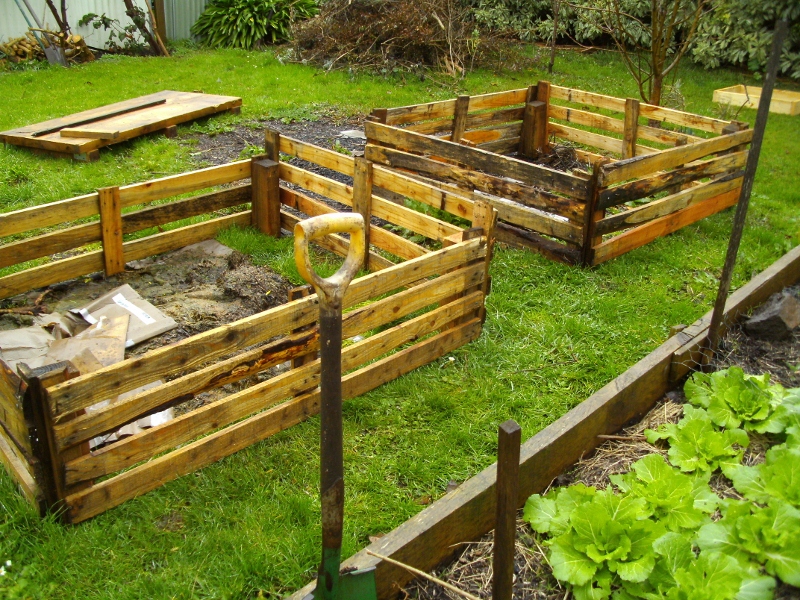
We took some of that timber and made frames for the garden beds for my melons and pumpkins to start in (they will be allowed to ramble out among the fruit trees).


We took some more of the timber and made these -


I know they look like pens (we had a lovely time with me joking that I would buy piglets to put in them and the kids telling me I'm not allowed to get piglets), but they are going to be the new raised vegie beds for summer.  I just need to line their sides with these feed bags (which are chock full of more feed bags) that my mum kindly dropped around to me yesterday and then fill them up with soil.


I also have more timber which will be used for making my planned cold frame (needs to be ready for my seed planting soon!) and perhaps also for a chook tractor.

On Sunday, Stu was still inspired to scavange, and he took a load of rubbish that's been hanging around since the kitchen renos to the tip and came back with two windows!  One is going to be the top of my cold frame (hooray for my now FREE cold frame) and the big one is going to be used to enclose the end of the verandah where he intends to start his home brewing back up again.


I like scavenging things.  I used to think it was a terrible thing to do, but now I understand that it is saving something from going into landfill, and also giving us items that we can turn into useful things for free.  Nothing wrong with that!

In amongst all of that we managed to bake, get in some dance rehearsal, teach the kids to play Cluedo and guzzle down lots of pots of tea.  We also ate lots and lots of delicious chicken soup and shredded chicken concoctions made from the rooster - he was delicious!

I love a good productive weekend and am looking forward to lots more in the coming months - I've just ordered my spring/summer seeds from Digger's and Stu is off getting the rest of the materials for his "brew shed" this week, so we will have lots to keep us busy.

Thursday, 12 July 2012

Chook happenings

I've been busy with the chooks the last few days. 

The first big chicken event came about because one of the school's roosters had started to attack people (there were too many roosters in the pen) and needed to be "dealt with".  My friend who cares for the school's chooks had accidently let him out of the pen when she was trying to catch him, and he spent a happy couple of days living behind our back fence, perving on our hens and waking Stu and I up early with his crowing.  When he moved himself into our front garden, I rang my friend to ask if I could "deal with him" for her.  You see, I have plans to start raising and preparing our own chicken for eating and have been reading a lot about the process, but not having ever done it,  I saw him as a good opportunity to see if I had the stomach for it.  My friend was more than happy for me to take on the task and so I did.  I'm not going in to details, but I will just say that it is a physically hard thing to do!  I had steeled my mind to the process, so in that sense I was OK (this was a better option that him dying for nothing), but it was just plain hard work, and the rain didn't help much.  But I got the job done, and while I don't expect he will make a great roast, I will be making chicken soup this week.

It seems I have to stomach for preparing my own chicken for the table.  My reasons are clear in my head (we have decided we are omnivores and need some meat in our diets, but would like to know our meat has had a happy, healthy life and minimise food miles), now I just have to work out the logistics of the process.

In lighter, happier, more vegetarian friendly chicken news, we bought ourselves some new egg laying girls yesterday! 

We went on a road trip with my Mum and teenage brother and sister to visit my Grandma.  We had a lovely day, lunching, op-shopping and visiting the Maritime museum and then stopped off at a local free-range egg farm on the way home.
L&J with my Grandma in the whale skeleton at the Maritime Museum
There were some dramas at the farm (we won't be going back there!) but we managed to leave with 4 new Isa Brown hens for us and 4 for my Mum.  By new, I mean 18month old girls who have been busily laying for the shops for a while and are just starting to reduce their productivity.  They are perfect for us though as we should get just the right amount of eggs from them.

We introduced them to our other girls (who have not been laying at all) when we got home and they had a few spats and then settled down to eat together.  I went out after dark and collected them from their various stupid roosting places (none inside!) and put them into the house.

They are very quiet and happy to be handled and stay near me chatting away peacefully.  But they are not particularly attractive (and camera shy too!), but nothing a few months of the good life won't fix.  They seem to be settling in so nicely this morning.....
These two came to chat to me at the back fence

And this one likes this shrub to hide in
One clever hen found the nesting boxes in my (recycled pallet) chook house and made herself comfy.......

And produced this!


Hooray!  Fresh eggs on the Wright household again!