Showing posts with label 12 months of Greening. Show all posts

Wednesday, 9 January 2013

Talking about making a difference

As we watch on the fire maps, a country is gripped in a heat wave and fires rage through. Mother Nature is thrashing and complaining again. She does that a lot these days. Like a toddler, she throws tantrum after tantrum.  Wherever you are in the world, you will have seen some of these disasters.  It's normal to have a tantrum sometimes, but when they are so frequent and so violent, something is wrong, something needs to be changed or the tantrums will only get worse.
Bushfires blazing about 200km from here, but close to some of my family.
Image from here
When we're given these natural disasters, our first instinct is to fight. Again, the toddler analogy works - as parents our first instinct with a naughty child is to yell at them and fight back. But all of you who have survived toddlers know that, in fact, the best option is to to be more gentle, to hunt for the triggers and to try to make life less stressful for your little one. And so with Mother Nature, her tantrums are telling us that life on earth is too stressful for her, she needs a break! And as the guardians of Earth, it's up to us to give her that break.

But how? The job feels too huge for our family or yours. But maybe it isn't. Every little thing we do to strive to help the Earth helps. If you turn off an appliance at the switch today, you've helped. If you buy less rubbish or reuse an item, you've helped. If you do a string of little things, you've helped quite a bit and if you can manage big things like going solar for your power or not driving your car, you've made an even bigger difference.

But the best way to make a difference is something I've learnt by accident over the last couple of months, and it struck home yesterday. You see I'd started to comment on the Grass Roots magazine Facebook page. Interesting conversations come up and I jump in to talk about things like cloth pads/menstrual cups, wee wipes, green Christmas ideas etc. And then I found out that all of my other Facebook friends can see these comments (oh the lack of privacy on Facebook is just scary!). I was pretty embarrassed. It is one thing to write on this blog or tell GR magazine about my use of these things, but I was mortified that all my work friends, school mates, belly dance colleagues, family and other friends now could know too! But then something amazing happened - a friend who had seen one of my comments asked to know more. We had a long and detailed (and not at all embarrassed) conversation about menstrual cups and now she is planning to get one for her and one for her daughter!  So now my changes to greener choices have not only reduced the amount of waste I produce, but have multiplied to much greater amounts than I alone could do. I've also noticed my family is starting to make a few changes after seeing our changes; people ask me about our solar hot water or our waterless toilet; people tell me that they think of me when they go to buy a disposable item, and you, my dear handful if readers, tell me that you are trying some of the things I talk about here.

So what is the best thing we can do to help our poor planet? We can talk about ways to help it!  We make little changes, then tell our friends and family about them and how easy they are and help them to make little changes too.  Then, maybe they'll tell someone, who will tell someone else,etc etc. A butterfly effect might just happen and together, our tiny efforts will become something huge.

So today, I'm not only encouraging you to talk to anyone who'll listen about little things we can do to ease the pressure we've collectively put on the earth, but I'm going to give you another little idea :-). It's just a tiny one, perhaps you already do it.

* if you cook bread, pastry, or roll out biscuits, chances are your recipe calls for you to cover your dough with plastic cling wrap. Don't! A damp cloth (a napkin or tea towel) will work just as well, that's what people did before they had rolls of plastic wrap! We don't use plastic wrap at all anymore, in fact. Items to be microwaved are covered with a lid or plate, items for the fridge are covered the same way and lunches use reusable boxes or bags. Maybe you could start eliminating plastic wrap too!

So that's my tip for today, perhaps it'll have a butterfly effect. If you're new to my blog, look around and you'll find more of the ideas that we do.

The blogs I read each day inspire me constantly - thank you to the bloggers who share the things they do to live greener, more sustainable lives. Here are a few great places to get inspired.


(BTW, I read many more wonderful blogs, these are just the ones where I get the most "green tips")

Do you have a tip, just something small, that we can spread the word on? Comment below! Or, if you write a blog, pop a link below and link back here on your blog. If you know another blog that, like those listed above, is full of ideas, let me know that too so I can add if to this list (and my personal reading list). Lets talk folks, and work together to make a big difference.

Friday, 28 December 2012

And so this was Christmas

December has a habit of racing past, doesn't it? One minute you are excitedly decorating the tree and opening the first day on the advent calendar, and the next you are looking at a pile of opened presents and leftover festive food.

So Christmas has been and gone again and looking back it was quite different here than other years, and while a few changes felt a bit odd at the time, the resulting feelings after the event are heaps better.

Our Christmas cake/gingerbread sleigh combo
Most of our changes were based on our conscious decision to be more environmentally friendly. Last year we had masses of mass produced, plastic encased gifts, many of which were so poor quality that they broke within a week, and they were all wrapped in masses of wrapping paper.

This year, the gifts we gave each other were all homemade, second hand or vouchers for our time and activities to do together. The gifts we gave others were all homemade, many from recycled/repurposed materials. And the things in the boys stockings were about 50% homemade, and the gifts from Santa were purchased with quality and longevity in mind. There were also a lot less gifts than in previous years, and they were all either not wrapped, or wrapped in reusable fabric gift bags.
Christmas day at home - notice the spunky matching PJs?

In addition to our efforts, we asked our parents to give less to us and the boys, and to wrap less. They, and others, took on the challenge and we received some lovely eco-friendly gifts and a small amount of fun things for the kids.

These were pretty big changes, so how did we go? Well, there were times when making the presents felt stressful, but it was more the deciding what to make, rather than the actual making. I started the making very early and finished a week before Christmas. The gifts were all really personal and very different to each other, so they suited my desire to not make the same thing over and over. However, perhaps next year I will try making a lot if the same gifts so I can do a bit of a production line for the making. I will post a list of the gifts I made, with some photos, in a little while.

The gift wrapping was easy too. I bought fabric last January (on clearance) and then as we needed them, I simply cut and sewed very simple sacks. They looked great under the tree and we got all but 3 bags back, so next year I should only need to make a couple more. And the tidy up was brilliant! Just fold the bags and put in a box and because we used curling ribbon to tie them this year, that was all that went in the bin - so much better!

Second hand presents were fabulous! The children bought at the op shop, and I received a gorgeous summer dress and a cookbook that I will probably never use (it's a casserole book from 1972), but I love to look at it and love the sentiment. Stu received a stack of good quality business shirts for his new job and a card game from the kids and a good quality jumper too. And Stu gave me a set of vintage kitchen scales, that are exactly the same as my mum's - I love them!
Second hand gifts which are much loved already

The only challenging thing about the gifts was that there were less. I know we wanted less 'stuff' and we knew there would be less, but the reality for the kids and us of having much smaller piles of stuff felt a little weird. Don't get me wrong, at the end of the day we were all grateful to have a smaller amount of quality, eco friendly gifts, knowing that all that was missing was the piles of junk that we usually have, but just for a moment, we missed it. It'll be easier next year.

Because Christmas is about so much more than presents, we had plenty of celebration too (with green changes of course!). The Saturday before Christmas, we travelled to Melbourne to catch up with family. This year we took the train which was great - cost less than driving, no one had to drive and we saved all that fuel. In the city, we saw some festive city sights and picnicked at the gardens with our extended family.

Christmas Eve brings our quiet family tradition of a platter of cheese, cold meats, deli treats and fresh fruit while watching carols by candlelight on the tv, surrounded by our own candles. This year there were homemade cheeses and biscuits and homegrown berries with our free range, local ham. And I gave a Christmas Eve family gift of homemade matching pjs - fun and very well received!
(blurry) shot of our delicious Christmas Eve feast!

We've hosted Christmas the last few years, but it was decided that mum would host again this year, so after our family time around the tree on Christmas morning, we headed to their place for a lovely family afternoon.

Overall, a beautiful Christmas that left us with a much better taste in our mouths and feeling in our hearts than last year.

And to top it all off, I get to share it all with you. So thank you for not only reading my ramblings, but to those of you who also write blogs, I would like to thank you for all of your inspiring posts this year, and I look forward to sharing with you into the new year.


Monday, 10 December 2012

Its beginning to look a lot like Christmas

It is nice to be back!  Back on the internet and all the good things it has to offer after over 2 weeks without it.  You may have heard of the fire in the Warrnambool Telstra Exchange (or maybe not), this fire wiped out all telecommunications in the district and caused some minor chaos.  There was no eftpos, ATMs or online banking; no internet at all which also meant no security cameras in the banks; we couldn't call anyone and the Optus shop sold out of phones (all those who deemed it impossible to live without a mobile phone ran in there to buy one) and there were thousands of teenagers out there without access to facebook ;)

I was fine without it all for a while, but by the end of the first week without a home phone, very sketchy and occasional mobile coverage and no internet, I was beginning to feel a little bit isolated from the world.  We finally got our home phone back after 9 days, and the internet came back after 15 days.  It is quite scary how reliant on telecommunications we are isn't it?

Anyway, I'm back, and life has gone on here and everywhere else.  I have wanted to blog about so many things these last two weeks, and maybe I'll get to some of them, but I'm going to start with a Christmas update.

We always start our Christmassy things on the 1st of December, and this year I made the boys an advent calender.  Each pocket is made from a spray painted, sewn up toilet roll, and they are hung on our kitchen notice board.  Each day, the boys get a random lolly each and a slip of paper gives them a Christmas activity to do.  The first one was a little treasure hunt for a new Christmas book, and since then they've had things like decorate the tree, visit Santa for a photo, watch a Christmas movie, write cards for their friends etc. 

Our tree is up and looking beautiful.  We bought a new tree this year after a very long family discussion about the various environmental impacts of tree choices.  In the end we decided on a new plastic tree.  We completely understand the implications of plastic trees, but we will use it for another 10 years (or more) like our last one, and it will safely hold all of our precious decorations.  Our tree has no Christmas lights this year though as the power to run even LED lights just seems wasteful in a country where it isn't dark until after 9pm at Christmas time.  Our tree still twinkles though with tinsel and decorations that catch the suns rays through the window.

Our tree decorations are a family tradition.  Each year since I was four, I would choose a special decoration and mum would write my name and the year on it.  When I left home, I took all of my decorations with me, and they all hang on our tree.  Stu and I continued this tradition for the two of us until the boys came along, and then we started it for them.  Each year we all hang our own decorations and remember all of the Christmases past, and the boys will be able to take their decorations for their own tree when they move out.  A beautiful tradition.

And we are starting to get a pile of presents under the tree too!  I've been very busy in my own 'Santa's workshop' and have made all the presents to give this year.  I have about 5 to complete and am so proud of the gifts we're giving.  The four of us will also get a few homemade gifts, including all of the 'stocking stuffers' for the boys which I've made too.  I wish I could tell you all the things I've made, but I don't want to spoil the surprises!  But I can tell you my crochet hooks, sewing machine, hammers, kitchen tools and every other crafty tool I have has been very busy making a wide variety of gifts.  I've taken photos of them all, and promise to share after Christmas. (want some of my ideas for this Christmas? head over to my Pinterest page to see some of my inspirations for this year and next). 

There are a few purchased gifts under the tree, some new ones for the kids, but mostly secondhand items.  I took the kids to the opshop to do their Christmas shopping.  They loved it, and so did the opshop staff who helped them shop!  For a grand total of $12, they each bought a gift for me and one for Stu and they are so proud of their choices - I can't wait to see what they bought!

Our December greening challenge is to not use wrapping paper.  All the gifts we're giving are therefore wrapped in re-usable bags sewn from Christmas fabric.  They are very simple rectangular bags in a range of fabrics and sizes.  We'll gather them back from people after they open the gifts (unless they really want them and have a use for them) and use them again for years to come.  This year we've tied them with curling ribbon, just because we still had heaps from previous years, but once that runs out, I'll buy reusable satin ribbon too.  Gift tags are made from recycled Christmas cards and pieces of plastic cut from milk bottles.

Today, I'm working on another sewn Christmas toy gift and some more Christmas baking.  Today's advent calender task is for the boys to decorate a plate of Christmas biscuits and deliver them to a friend/neighbour, so we'll do that this arvo.  And in the midst all those tasks, I'm going to travel around blogland checking out what all my favourite bloggers have been up to!

I hope you're having a very happy December too
xx

Monday, 19 November 2012

An exciting purchase.

I have just bought something that I'm very excited about.  It was a pretty expensive purchase, and will come by courier, so I don't even get to 'play' with it yet.  I'm going to tell you what it is, and later (after it arrives and is set up), I'll also review it.  But first, I'm going to tell you the background of my purchase and why it is so exciting.

We live in a tiny 'town' in rural Victoria.  We have a regular sized block of land and neighbours, but we have to walk to a shop to pick up mail, drive a fair way to buy things and enjoy watching farm vehicles go by, hearing lots of birds, cows and chooks (ours included) in the mornings.  We have no mains gas, so are totally electric for the running of our home.  We have no mains water or sewage system, but instead rely on our own tank water, bore water and a septic tank.  Townies find this to be a scary sort of setup, but if you've lived in the country at all, you know that this is just a way of life, and, with a bit of luck, your setup is so good that you don't even have to think too much about it.
image

When we bought this place, we were lucky enough that it already had great water tanks that collect ample water from our (surprisingly) large roof.   We also had our garden taps connected to the bore pump of the school next door, so we were able to water our gardens and our animals, and even flush our loo with bore water instead of rainwater, and so we have always had the luxury of ample water to do as we need.  On top of this, we live in the one part of Victoria that was never put on water restrictions because we have been the lucky ones and received a decent annual rainfall each year.  Having said all of that, I'd like to point out that we've never been ridiculous with our water use.  We know that excessive use of bore water isn't ecologically great, and so we've always watered our garden enough, but let the lawns die over summer and only watered parts of the garden when it was essential.

So for the last 7 years, we've been blessed with a water input that meets our needs, but our output has been full our problems!  It turns out we have a very dodgy septic tank.  I dread to think how many dollars we've spent on repairs and maintenance - we've had it pumped out a couple of times, we've had a plumber do some unknown thing to it, and another plumber replaced the pump that no-one even knew should be in there!  It is also a strange setup.  Apparently septic tanks should have a grease trap between the water entry and the main storage tank.  We have a grease trap, but it is not in the right place and is actually an old Telecom pit which isn't at all right to be a grease trap.  I don't really understand septic tanks (sewage treatment plants I do - I used to take guided tours of one!), but what I do understand is that ours has problems that do not seem to be fixed by any amount of repairs. 

We've considered replacing the system with a more environmentally sensible system, but the financial outlay and the major disruption to the property are seriously off-putting.  And since our septic tank seems to work fine when much less water is being put into it, we were leaning towards making changes in our home to reduce the input to the tank, and had started researching how to do that.

Then we lost our bore water supply. 

We were cut off by the school by accident, and it seems that since the house is no longer owned by the department of education, we're not to be reconnected.  So now, with a full vegie garden and a yard full of fruit trees and animals that all need water, we had to come up with a plan that would enable us to keep up the water to everything that needs it using only our rainwater supply.  And this new problem, together with our septic tank problem, have led to some watery changes (and my purchase - getting to it!).

First, we started to collect greywater - the old fashioned way.  I have a large water container with a tap on it that I collect my washing machine water in and then deliver the water to each of my fruit trees in turn.  Thus saving about 20L from going into the septic a day, and also giving my fruit trees a boost.  We've also added a bucket to the shower.  This collects more than 10L of water a day which gets watered around the place.  We eventually also hope to add a grey water diversion from the bathroom to water some of my ornamental garden using a hose system.  So all up, we've already started reducing the water needed for the garden and the water going into the septic tank.

And today, I bought a waterless toilet.  I can't believe how excited I am about a toilet!  But a toilet that will not only save an estimated 80-100L of water a day, but will also take the pressure off of our septic tank.  The toilet system we've bought is a urine diverting system that collects solid matter and toilet paper in a bucket in the toilet that is then emptied into a separate composting system where it is left for 12 months (or more) before being able to be used as fertiliser around the garden.  You can collect the urine to use as a nitrogen rich fertiliser too, though we're opting to divert ours straight into the septic tank since we have the system there.  The toilet uses no water, though it does use a small amount of electricity to run a fan to ensure no smells or moisture build up inside. 


I have done countless hours of research into the best system for us, and found that there are quite a few waterless (or very low water use) toilets available in Australia.  Our requirements were quite specific though as we needed a unit that didn't need underfloor access (we have a low ground clearance).  This meant our choices were limited to only a few brands, many of which looked like giant versions of the old chemical portable toilets.  I'm sure these suit some, but we wanted ours to still look nice and not frighten visitors away.  So we made our choice - the Seperett 9000, from "A better way to go" - and I've ordered it and I'm really looking forward to getting it and installing the system.
The toilet we are getting.

Ahhhh.... the things we get excited about!  I promise to report back when we have installed it and used it for a bit with a full review.

Thursday, 11 October 2012

12 months of Greening - Organic October + No Heating!

I didn't do a 12 months of Greening post last month, oops!  But I posted a bit about it on my Slow Living post.

This month we've dubbed Organic October.  We're trying to buy (or at least consider buying) organic products where possible, and also trying to use more organic practises in the garden.  The word trying is important here and I'll explain why down lower.

We've spent quite a bit of time removing chemicals from our bathroom and our laundry this year, and have been cooking from scratch a lot more so that we are removing much of the chemicals from what we eat.  This month, we're delving a little deeper and removing those unseen chemicals from the fruits, vegetables and grains we eat by choosing (where feasible) organic options.  I'm no expert on organics, but my take on it is that the chemicals that are added during the growing of non-organic products are used to make them grow faster, remove pests and weeds etc.  These chemicals come through to us, the consumer in small amounts, but they also damage the ecosystem around the land in which the product was grown, and this environment impact is the most important factor for us.

I don't have easy access to an organic green grocer, so I am choosing organic labelled products where I can, and otherwise, using mostly our own food crops, or choosing in season foods.  I figure that many of the chemicals that are used on our foods are to either grow them out of season or to store them for selling out of season.  Buying in season foods is also cheaper and they taste better, a win-win.  The only challenge in buying only foods in season is that they are not always the foods my kids like to eat.  For example, I try to get the kids to eat fruit each day, but they have never been big citrus fans, so winter through to now is a tough time to find in season fruits.  But as they get older and their understanding of this grows, they're more willing to try, and this week we have finally won the "you will try and you will like mandarins" battle - woohoo!

We're also trying some other things such as organic baking products and cereals.  Unfortunately, some of these are more than 4 times the price of the non-organic variety.  I understand why, and truly want to support organic producers so that these prices can come down, but this isn't always easy on the budget, so I do what I can, and sometimes the weekly shop just won't allow the added expense.  Some items however we now only buy organic - like tea and coffee.  This feels like a good change.

In the garden, I'm also trying to go organic.  I have always used chemicals sparingly, but this year they are only used as a last resort.  Sadly, I've had to cave on this already with the use of some snail bait.  As I've mentioned, I am trying to grow as many of my veg from seed as possible.  I have started transplanting out into the garden, and despite all of my organic efforts (beer traps + egg shells + coffee spray + coffee grinds + morning snail and slug massacres), I have still heartbreakingly found whole seedlings chomped through overnight.  I decided that it was expecting too much to tackle both fronts (seeds and completely organics), so have used a small amount of snail and slug pellets (the kind that say they won't hurt other animals) just to protect the seedlings.  All other chemicals have been banned from the garden though.

BONUS CHALLENGE

In addition to our regular monthly challenges, we decided earlier in the year to make our mid-autumn and mid-spring months no heating and cooling months.  October is therefore one of them.  So in addition to our organic challenges, this month we have turned off our heater at the meter box and banned all other heaters and fans.  This would be fine if the weather was always Spring like, but the last few days have given us f-f-f-freeeeezing evenings!  We've toughed it out though, snuggling up in blankets, slippers and enjoying our hot water bottles and warm drinks.  Why would we do this?  partly because we like the challenge, partly to save power and therefore greenhouse emissions (and a few dollars) and partly to remind us that heating and cooling are a luxury that we can (at times) live without.  Living in southern Victoria means we get quite cold Winters, and I think it would be unhealthy to live without heating all the time, and there are a couple of days a year when the air-conditioner being used for just a little while means we can continue to function.  But a lot of the time, it is possible to be heater and cooler free.

Perhaps you'd like to join us on one or more of our challenges this month?  Let me know if you do and how you go.

Friday, 28 September 2012

Green changes - Better late than never

While shopping with the kids yesterday, I was playing the game where I tell the kids what I want and they scurry off down the aisle of the supermarket, racing to be the one to put it in the trolley. 

The first item was a canned fruit.  They found it quickly and brought it back.  Then I sent them back to replace it with the store brand, cheaper item because that's what I've always bought.  But the moment of having the prettier, more expensive can in my hand gave me a moment of pause, and with my two mini greening detectives by my side, we flipped all the cans to discover where the fruit came from.  Thailand, Indonesia and Australia were our choices, and so, we bought the one that was a little dearer and briefly discussed food miles and supporting Australian farmers.

The next item was a baking ingredient.  Again, I grabbed my trusty budget brand.  This time though, a store special made me pause.  I flipped the two packets to check where they were made, and while hunting on the packet, the ingredients of the cheaper brand caught my eye.  Ingredient number 1 was palm oil! I literally threw the pack on the ground like it had bitten me.  I've read about palm oil and really don't want anything to do with it.  Needless to say I bought the other, more expensive product, that didn't contain nasty ingredients.  (for the record, both products were made in Australia from local and imported ingredients).

I felt sick and guilty, the same way I'd been feeling each time I thought about all the times I've bought intensively farmed chicken and pork, and all the chemicals we've unknowingly pumped into our bodies over the years.  This is green guilt - feeling bad for hurting the planet.

But I'm OK now.  I'm OK because while I know we've made some bad choices in the past, we made them unknowingly.  I hadn't, in the past, thought to turn over the packet and read.  Our shopping needed to nourish and fit the budget, and it did.  But now I have spent a lot of time learning, and it is no longer acceptable to me to buy many if the products I used to.  Should I feel guilty for all of my past purchases? I don't think so.  Not only does guilt not help, but I didn't realise or know at the time, and I was just doing what I thought was OK.

Now I know, and if I go back, then I should feel guilty, very guilty.

I've always thought of myself as environmentally friendly, but the sheer number of changes we've made so far this year, and the amount that I've learnt is astonishing.  So it turns out we were a fairly washed out shade of green before, and I know that while we are now among the most green people I know, that it is possible to get much a much bright shade.  I also know that each change we make is better late than never.  Yes, it turns out I've been buying palm oil products, and that's really bad, but by stopping now, I am making a positive change for the future.

The whole point of this year for us is to get greener, step by step.  And each positive step we take is better late than never.  We are still relatively young, and our children have their whole lives ahead of them.  The years of doing good deeds for the environment are going to far outweigh the years of unintentional bad choices.

Wednesday, 15 August 2012

12 months of greening - August - Buy nothing new

It is the middle of August and I'm only just getting to this post. Not because I haven't had time, but because our challenge this month just doesn't feel all that challenging.  I've just worked out why though, so I want to share that with you today.

This month's challenge was inspired by this post over at Crunchy Betty. Have you been to her blog? Go check it out if you haven't, it makes for great fun reading, with lots of ideas.  Anyway, if you scroll through the comments on that post, you'll find mine stating that we're going to challenge ourselves to buying nothing new this month.

Buying nothing new doesn't mean not acquiring things, it just means that we stop taking the easy way out each time we need/want something.  So often, we see a need for something in our homes and head off to the shops and buy it.  Often, the item we buy is from a large department type of shop, it is relatively cheap and easy to buy.  But these cheap, easy to buy items are usually made overseas, often in factories with poor conditions for the workers, and they are made from poor quality materials that are frequently un-environmentally friendly in their production and they are not made to last.  I make no claims to being an expert on this topic, but I do know from our experience that we have bought so many supposed bargains (clothing, household items, electrical etc) that, after only a short time, become useless rubbish that finishes up in landfill.

So this month's challenge asks us to stop and think before we buy.  Can we make an alternative to a new item? Can we source what we need second hand? Can we do without? We have a list that we can add to, and at the end of the month, if anything on that list has not yet got an alternative, we'll buy  the most ecologically sensible option for that item.
Our list is up on the wall, ready to be added to anytime.
"Buy nothing new (except food) this month, but write anything we think we need to buy here.  If it isn't crossed off because we found it second hand/made it/learnt to do without, we can buy it next month"

Half way through the month, our list has three things on it. This is not to say that we've only  wanted or needed three things, but we've been coming up with make-do solutions before even writing things on the list.  And we've done this naturally and easily because the challenges of the past 7 months have altered our way of thinking. 

These are a few examples of things we could have written on the list, but found a way around buying new:
  • A warmer pad or belt for the home brew was unnecessary because we used hot water bottles and a blanket that we had.
  • I wanted to buy a new pair of pants, but dug into the back if my drawer and pulled out a pair I just haven't worn for ages - a change is as good as new.
  • We were going to buy new materials to build a workspace at the end of our verandah, but a walk around the yard and some creative planning had the job done with items we already had.
  • I wanted new materials for making gifts, but a rummage in my craft cupboard and at the Opshop found plenty of fabric and yarn for a few projects.

We've also extended to things people have offered to buy for us (afterall, this isn't about saving money, its about saving things). Stu was offered (for a birthday gift) a gadget so we could watch programs that are on our computer on our TV.  He was tempted, but I gently reminded him that we have more than enough gadgets and electrical items.  So we got creative again and set up our deck chairs in our office so we could watch these things on the PC monitor instead (which is a TV anyway isn't it?).

The items left on our list, will probably be bought in a few weeks, but by delaying, we take the time to think about what option is going to last the longest, be the best value and be the most ecologically sustainable.  In the interim, we continue to use up what we have properly or simply do without.

We live in a society where it is common to just buy anything we need or want immediately.  It is so much less common these days to do without an item, to wait until a birthday or Christmas to get something you want. To borrow, share or make something we need.  We're all about instant gratification, and low cost (poor quality) items in our shops make this possible even on a modest income.  But giving in to this means that more resources are being used to create the things that we are buying, and ultimately throwing away to fill our world with non-biodegradable (sometimes toxic) rubbish.
Our big shops sell temptingly cheap items.  It is so easy to buy cheap, poor quality items
that will need replacing down the track.  We're guilty......

If we stretch our minds a little, join together as a creative family or community, and buy less for wants, and more for genuine need, we'll be better off in the long run.  I'm certainly not perfect, nor is my family, we still buy and own more than we need, and have been tempted into buying items I know will only last a short time way more often than I care to admit.  But by doing as we're doing this month, we are slowing that down, just a little, and making a difference.  And hopefully, but thinking about these things enough now, we will continue to change our ways into the future.

Friday, 27 July 2012

12 months of Greening - March - Recycle, Repurpose, Restore

Time for another back track post about our six months of greening (before this month is over....).

March was the big month of renovating our kitchen, so it seemed apt to set this as our recycling and repurposing month.  Repurposing or upcycling items saves on landfill and also on the energy used to produce brand new materials and items.  It is also a great way to save money and create unique items that have character and charm.  We recycle and repurpose things a lot, and we wanted to set it as a theme in our kitchen.

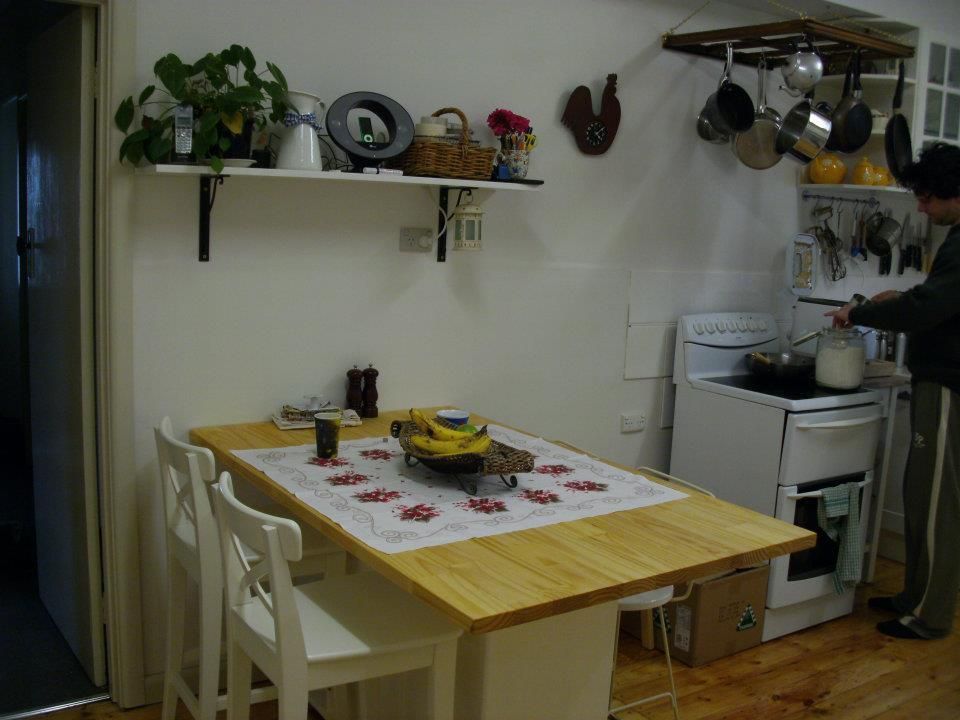
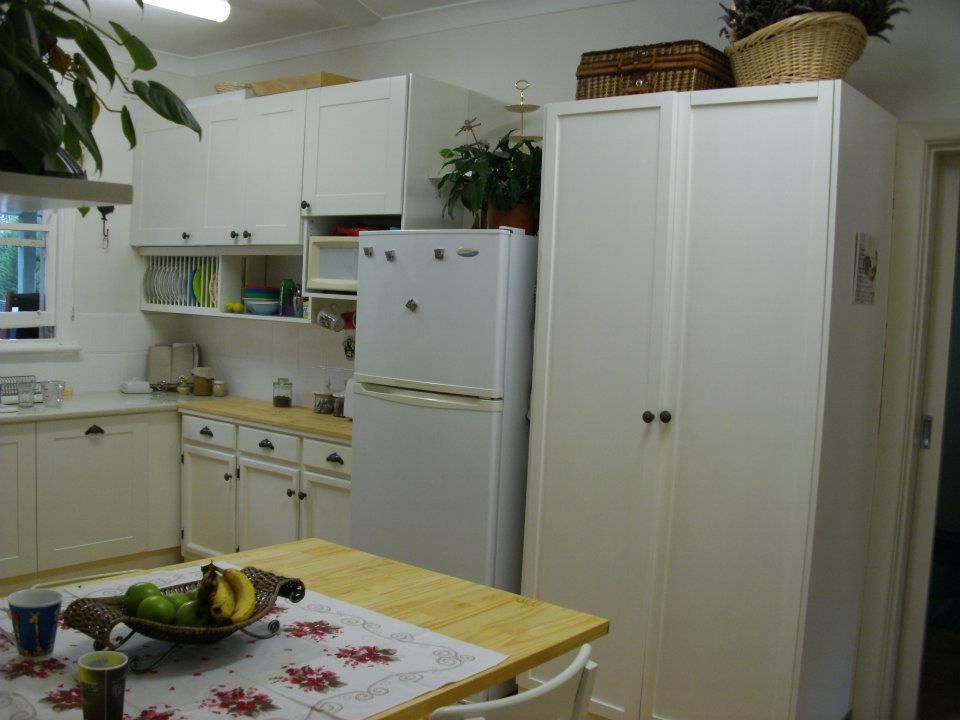
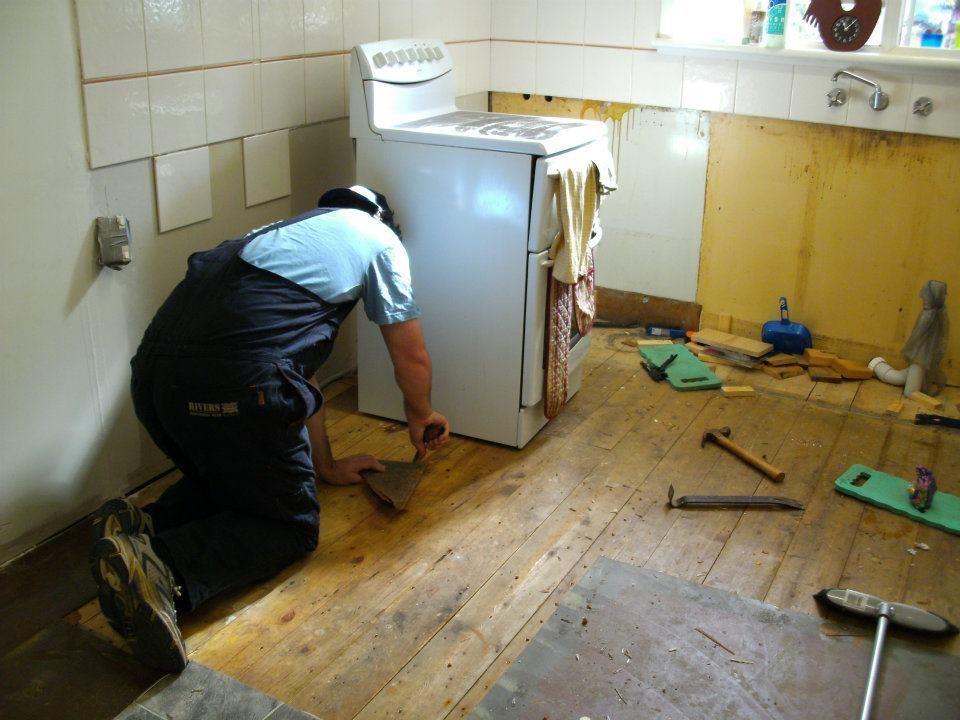
We had done a lot of research into our kitchen design, and threw out a lot of plans that would need significant work that we couldn't do ourselves, and also designs that were all new.  It had to be recycled and it had to be on a budget, but it also had to be practical and stylish with the following list of must haves - a dishwasher, a comfortable place for the family to sit and eat, a pot rack and a plate rack.  In the end I think less than half of the items in the kitchen were new, and these we built ourselves as much as possible.  The finished results were even better than we could have hoped for.  These are some of the recycled and repurposed things that we included in our kitchen (the photos were taken throughout the renovations).

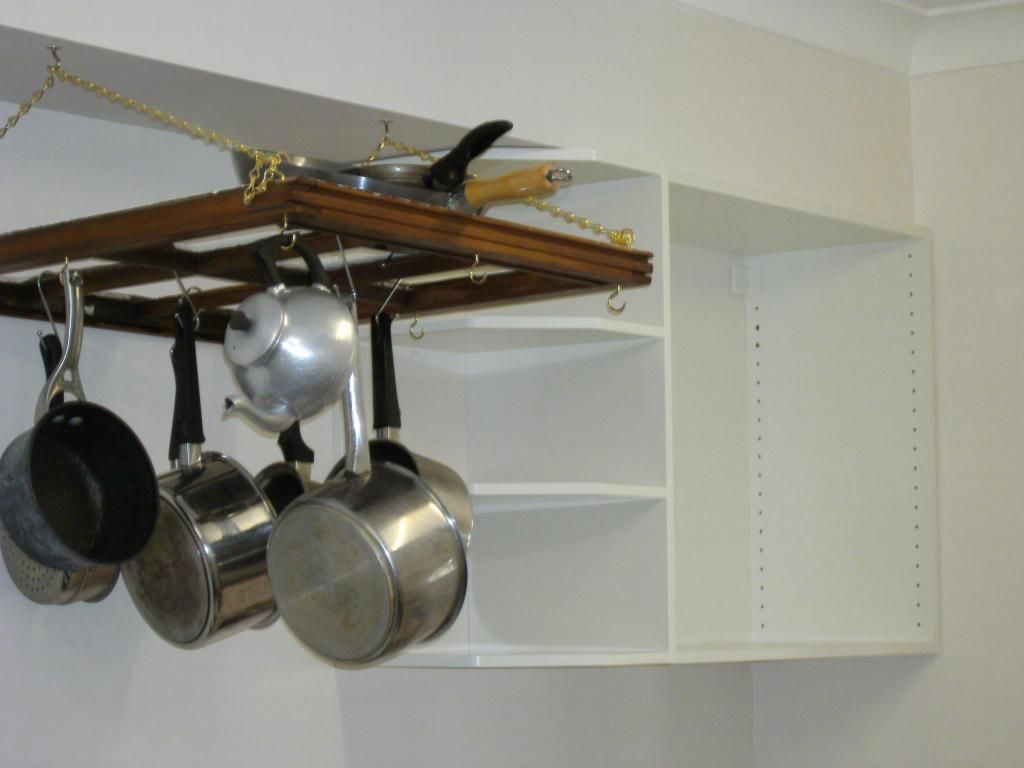
Our pot rack was made with a broken sash window that we picked up for free

Our blind and the matching rag rug were made using vintage sheets from the op-shop.  And the tiles/splashback in our kitchen we kept, updating them with a coat of tile paint.

This sideboard was an ugly piece I picked up at an opshop for $65.  We painted it, added a new top and these vintage handles that I bought on ebay (you can see it in the kitchen below).

Our island bench was another solid wood op-shop find, $60.  We removed the doors from the cupboard, painted the bare shelf unit and added a timber slab to the top of it.  It is a home for all of my electrical appliances and a great place for family and/or friends to sit.  And the cork board on the wall (which was there before the renovation) was made with leftover cork tiles we found in our shed when we moved in here.

The 1970s spice rack on the wall next to the window was found in the op-shop, complete with jars for $5.  I painted it to match the kitchen and added new labels.

Our pantry was the original pantry in our kitchen, but it was a peach colour and plain flat laminex.  We painted it and added some timber trim and the old handles so it would tie in with the overall look.

We were going to have new lino floor laid, but decided to work with what we had, pulling up the old lino and having our baltic pine floors sanded and varnished (see the beautiful finish above).

We also recycled items that we took out of the kitchen.  The old lino went to my mum and to the kids cubby house and the old kitchen cupboards became shed and laundry cupboards and will also be used in the brew shed and as a potting bench.

In addition, we chose to keep items that were fine in our old kitchen like the oven/hob, the window, fridge, etc - why replace things that don't need replacing?

The work we did on our kitchen was hard, but very satisfying.  I love knowing that many of the items in the kitchen had a life before.  The entire kitchen reno also came in well under our frugal budget and I love the result every day when I'm working in there.

You'll find lots of other recycling projects on my blog, and many more to come.
I'd love to here about your favourite recycling/repurposing projects too.

Thursday, 12 July 2012

12 Months of Greening - July - Make it, Don't buy it

This month in our 12 months of greening challenge we are aiming to increase the number of things we make from scratch rather than buying. From food, clothing, and gifts to hygiene and 'beauty' products and things needed in the  garden/home.  Why? Homemade means we can control the ingredients/materials, using Eco-friendly or recycled as much as possible. We tend to buy ingredients in bulk meaning less packaging.  The items made are what we want and we know the work put in, so we use them more mindfully. And as a bonus, the products are better for us, cheaper, and we have a real sense of achievement and being in control of our life.

We've already started on this journey of course, cooking most things from scratch and making all of our gifts and many things for around the home, but this month is just an added challenge to see how far we can go.

Today I thought I would take you to the bathroom and talk about what I've made and my future plans.

Soap
I made my first batch of soap in March, simply following Rhonda's recipe but I added some oats.  It's nice soap, but the oats annoy us.  We've nearly run out, so I made a second batch on the weekend, this time infusing the olive oil with calendula and adding about 20 drops of pure lavender oil. The molding worked better this time too - can't wait to use it!

The white rectangular bar is one of the remaining bars from the first batch
The wedge and small hearts are the beautiful new calendula batch.
My 'no poo' routine
I haven't washed my hair with shampoo for months. I won't regale you with the whole story, but I will tell you my current routine which works really well for me.  I only need to wash my hair about every 5 days.  In between, I either give it a rinse, or use a shower cap and give it a good brush.   On hair washing mornings, when I make my morning cuppa I also make a brew with dried rosemary and lemon verbena leaves from my garden.  This brews while I have breaky, then I strain the leaves and add a splash of white vinegar* - and this is my conditioning rinse finished.   I have a bottle of water mixed with a few spoonfuls of bicarb in the shower to wash my hair with - this lasts me ages and just needs a shake before I use it. In the shower I pour some bicarb mix onto my roots and rub until it feels slippery, then rinse out.  At the end of my shower I pour all of the rosemary brew over the ends of my hair - I don't rinse itout.  My hair is happy, healthy and shiny and the routine is so cheap and easy.  As a bonus, the reduced shampoo and conditioner in the shower means less soapy scum all over the inside of the glass shower cubicle! 

* I know most people use Apple cider vinegar for this, but I didn't have any the first time I made it, so I just used white. By the time I remembered to look for ACV at the shops, my routine was working so well I decided not to muck with it.  White vinegar is also something I always have and it's cheap!

Hairspray
I use hairspray when I do my hair for special occasions or performing.  I had run out of the horrible chemical in a spraycan variety, so made some on the weekend, vaguely using this recipe.  I tossed about 6 squeezed orange halves into a pot (leftovers from making a cake), covered them with water and brought it to the boil.  I boiled until the liquid had reduced to about a cup.  The strained liquid (which tasted like weak orange cordial) was then allowed to cool, and mixed with 1/4 cup of vodka and some lavender oil.  Does it work? Sure does! It's not a super strong hold, but  good enough and it smells nice too.
Love my all natural bathroom shelf!


Calendula salve
I made some of this using Christine's recipe a few weeks ago.  Lovely for my sore winter hands and the eczema spots in our home.

Toothpaste, Deodorant and more on the To-Do List
These are the next items on my to-do list.  I have seen a few recipes around, and would love your thoughts.  It would be good if I could make toothpaste to put it in a pump pack so it is neat and easy to use for the kids.

I am going to try making a roll on and a manly spray deodorant for Stu. I don't like the idea of the stick deodorants.  I plan to try these recipes (the spray one here and this roll on) and will let you know how I go.

There are a few others in my list to try - a facial toner, hair gel for Stu and lip balm to name a few.  I like the idea of a wholly homemade bathroom (and medicine cabinet?).  I would love to hear about other people's experiments - even failed ones!

Thursday, 28 June 2012

12 months of Greening - January - Less waste part 2

Yesterday I talked about how we were working to reduce our household waste back in January.  We reduced a lot of the general waste and recycling, but also noticed a lot of single use products that we were using - mostly made of paper - and were also keen to reduce that waste.  Today I'm going to talk about that.

DISCLAIMER- In this post I'm going to be talking about replacing some personal hygiene products with cloth alternatives. Some of you might not want to know about this - if that's you, stop reading now and don't say you haven't been warned :-)

Cloth nappies

No, my 7 year olds don't wear nappies, so we don't use cloth nappies anymore, but we did.  We used lovely flat terry towelling nappies until the boys were 6 months old.  We then had a break from clothies as we moved house twice and were seriously sleep dperived, but picked them up again a few months later when we discovered modern cloth nappies.  We were big fans of fuzzibuns back then as the market for SAHM made nappies wasn't so big.  I loved the cloth nappies!  I didn't mind washing them, and except for the occasional leakage problem when the boys grew or changed (which would also happen with disposables) we had no problems with them.  Plus, how cute is a baby bum when clad in a cloth nappy?!

So we didn't bring in Cloth nappies this year, but I mention them here because I realised that if cloth was good enough for our precious babies' bums, then it was certainly good enough for some other uses..... here's what we've done.

Tissues

We used to have a box of tissues in every room. They'd be used for wiping noses, cleansing my face, mopping up and whatever else we could think of to do with them.  At times, you could look in our kitchen bin and find it piled up with scrunched up little white pieces of paper.  No more.  We have a single box of (100% recycled) tissues in the house in case a guest wants to blow their nose and that's it.  I found a collection of flanallette bunny rugs in the shed from when the boys were babies and cut them into two sizes with my pinking shears - small for my face cleansing, and larger to be our s'not paper tissues (yeah I know, we're hilarious!).  I made enough so that they don't need to be carried around like hankies often are, but are single use and then go in the wash.  Unless they are really dirty, they just get chucked in with the other washing, line dried (which kills any germs) and then folded back into their convenient basket. Simple, green and very cost effective!

S'not paper tissues drying in the sunshine

Dishcloths

I used to buy and use sponges and scourers for my dishes, use them for a couple of weeks and then toss them in the bin.  Not anymore.  My friend knitted me some dishcloths and I crocheted a few too, so now I have a lovely collection of washable dishcloths that do a much better job of cleaning than anything I could buy and then throw out anyway!

Paper towel

I never used much paper towel, but it was always there for the occasional spill/grill clean, and we had paper napkins on the table.  So, I replaced these with a set of homemade cloth napkins made from a vintage sheet.  With regards to the paper towel, we use rags to clean up most messes, but for some things, like cleaning the fat from the grill, we use a paper flour bag or similar that has already been used anyway.

Girly stuff

I bit the bullet and went cloth with my menstrual pads too.  I bought some made by a SAHM on ebay and then I made myself some using recycled fabrics.  I was a little dubious, but I LOVE them!  I used to have to buy a certain more expensive brand of pads as I reacted to something (don't want to think what) in most brands.  Now I don't have to worry about that because my pads are simple, clean fabric that has been washed in my homemade laundry powder!  They also fit well because I made them to fit well what could be better than that!?  I did find that they move around a bit when I'm excercising, so I also bought a menstrual cup.  My total cost outlay for my "kit" was about $60, which will have been well paid off in 6 months worth of savings.  And do I mind washing them?  Not at all, easier than nappies.

In the toilet

The only change we made in the toilet was to use strictly 100% recycled toilet paper.  I've hinted several times that we could try cloth, but am not being met with much enthusiasm from the rest of the family..... perhaps next year.

All in all, our changes here have saved an awful lot of landfill.  We might use a little more electricity and water in the washing, but the items slot in with normal washing, so it is negligible.  Plus we only wash in cold water and have water tanks that are nearly always full anyway, so the cost isn't worth considering. 


Have you made cloth changes?  Do you have any other suggestions? 
I'd love to hear your thoughts.

Wednesday, 27 June 2012

12 months of Greening - January - Less Waste Part 1

If you've seen any of my other 12 months of Greening posts, you'll know that we are giving ourselves little eco-challenges each month this year in an effort to make our home more environmentally friendly.  We have a calender in the loo with the monthly challenge written on it to remind us and I love that every time a visitor goes to powder their nose, they come back asking about the current month's challenge.  Sometimes they even stay a bit and read through the other months.  I feel like our personal challenge might have a carry on effect with our family and friends.  Maybe with the blog world too now.......

The challenge came about as a sort of New Year's Resolution after we cleaned up the Christmas mess.  We were all quite spoilt last year, but the amount of rubbish that we had to dispose of after all the celebrations made me feel physically ill.  Not only was there a pile of wrapping paper a mile high and a recycling bin full of the remains of Christmas party drinks, but the amount of packaging on the toys and other gifts and on the food was disgusting!  And then there were the cheap gift items that didn't last more than a few days and ended up in the rubbish bin too.  All in all, we contributed way too much to landfill for one small family - even after I meticulously removed all cardboard to recycle.

So the very first challenge of the year was to reduce the amount of household waste we produce on a regular basis (Christmas waste challenges are already set for this December!  Stay tuned!).  This turned out to be the catalyst for a vast number of changes we've made over the last 6 months - changing the way we shop, eat, give, dress and even renovate our home!  Because it was such a big month of change, I'm writing it up in two parts - this part will focus on general rubbish.

So, over the month of January, we paid close attention to each and every item that we went to throw in the rubbish bin.  We asked - could it, or any part of it be recycled instead - by us, or via the recycling bin?  And was there an alternative product that we could use that would produce less waste?

The first question was the best one for the children.  They would ask (and still do) whether an item should be recycled or was rubbish each time they went to the bin.  We got better at seperating items so that at least part of the packaging could be recycled, and I taped a list of normally disposable items that I could reuse to the inside of the bin cupboard so we could wash them and put them aside - tin cans, plastic bottles and jars in particular.

The second question was my big revelation.  I noticed that every single loaf of bread produced a bag and a tag; that the cat food we used produced a decent sized pile of packets; that fruit bought from some places came in ridiculous plastic containers and plastic bags; that tissues and paper hygiene products took up a large amount of bin space; and that sooooo many products that we buy (even the ones we called basics like pasta, plain biscuits and noodles) came with at least a plastic bag if not more rubbish.  This made me feel a bit silly that I hadn't noticed before, and a bit angry that even without meaning to, a family produces a huge amount of non-recyclable and non-organic waste.

And then I got creative.

I hunted the web for some ideas and I used the resources I already had and I started to reduce our waste by making better choices in the supermarket and also making nearly everything from scratch.  By making my own bread, pasta and biscuits, I not only reduced the waste that we created to a small pile of recyclable products like flour sacks, I was also able to give my family a better quality product for a smaller price.  I changed the way I shopped too, choosing to buy a weeks worth of fresh pet mince for the cats instead of the small packets and buying my fruit and veg where it was not packaged (and using my homemade produce bags instead of the plastic ones at the shop). 

Plastic bags got the total flick too.  We used to use green bags most of the time, but if we forgot and got plastic bags, that was OK as we used the bags as bin liners.  We learnt that you actually don't need a bin liner (duh!) and rubbish now goes straight into the household bin and then into the big bin for collection.  And if the bin gets a bit dirty?  We wash it!  So our green bags became essential items and we got much better at taking them with us (because if we don't, we still can't get a plastic bag and therefore have to carry the shopping with no bag which isn't fun!).  And as I mentioned, I made some produce bags for the fruit and veg.

We looked at every item we bought, and thought seriously about its packaging.  Sometimes we chose to buy with more packaging (money and quality still had to be considered), but often we decided to do without or buy an alternative with less waste.

Paper products got a big overhaul too, but I'm going to discuss those tomorrow.

As I said, it affected our dressing too.  We introduced a "one in-one out" policy for clothes which seriously makes you think twice about buying that "bargain" and we started fixing more items if they still had life in them, all in all, less waste from newly purchased products and also from us throwing things out.  And the renos?  When we decided to renovate the kitchen, we thought of as many ways as possible to avoid throwing things out - before we pulled out the cupboards, we allocated them new jobs in the shed and the greenhouse (which we haven't built yet.....) and before we pulled up the lino, it had new homes set up in the kids cubby and my mum's laundry.

Producing a certain amount of rubbish is, sadly, inevitable, but the amount that we produce is controllable.  By changing our ways, we find that most weeks we produce only one small kitchen bins worth of rubbish and a couple of boxes of recycling.  This is about 1/4 of what we used to produce.  Imagine if everyone in the world reduced their waste production by 75%..........

To be continued


Monday, 25 June 2012

12 months of Greening - February - Rubbish Free Lunches

I thought I'd better get back to my 12 months of greening posts before another month clicks over and before I forget what we did back then.

Today I thought I'd post about February.  In February, the boys went back to school, so it seemed sensible to make our challenge school oriented.  We decided to go with rubbish free lunches, but extend it beyond the children's school lunches and make it about Stu's work lunches and my lunches too.

The kids lunches turned out to be the easiest.  We were already using plastic sandwich boxes, small plastic "snack boxes" and reusable drink bottles for water.  The only tricky things here were that I had to make more items from scratch than I already was - no "lazy morning" chucking in of muesli bars any more.  And occasionally, I had to get creative with how to pack things - like muffins which were too big for the snack boxes (cut them in half and pack differently) and bread rolls the wrong shape for sandwich boxes (more about these in a minute).  We didn't worry about organic rubbish in lunches, so apple cores and banana peel wasn't a concern.  Our school also has a "heat up" day in which kids can take along something from home to be warmed in the pie oven or heated in the microwave.  Last year the boys took a LOT of cup noodles.  These got the flick this year to be replaced with homemade pies and leftovers.

I thought the adult lunches would be easy, but we learnt that we eat takeaway items more often than we thought!  Stu would often "not have time" or "forget" to make lunch in the past or I would be held up in town and then we would "have to" buy something - there is a lot of rubbish in a takeaway lunch (in more ways than one!).

So we got better with our remembering and always took at least a bottle of water and a snack, if not a whole lunch.  The other problem we came across was bread rolls. Stu and I, like lots of adults, like to have a bread roll stacked with salad, meat and cheese and we found that these wouldn't fit in a standard sandwich box, or if put into a larger box, would fall apart and be a mushy mess by lunchtime.  So I created roll wraps.  A washable fabric wrap for rolls that simply buttons around to hold it all together :)

Several months later..... we still don't use plastic wrap or other disposables in our lunches.  Although we will sometimes (maybe once a month) get a takeaway lunch, and when we have been really busy (like when we built the kitchen) the kids have had the odd muesli bar or similarly packaged snack.  But for the most part, we are still having rubbish free lunches - SUCCESS!  And, this green change, comes with bonus health and financial benefits :)

Wednesday, 6 June 2012

12 months of greening - April - Saving power

Rhonda over at Down to Earth posted today about Solar Power, so I thought I would follow on from her post and write about our April challenge in our 12 months of Greening, which was to cut our power use.

EcoSwitch
We've always tried to keep our power use down, heating and cooling only when really needed (and installing energy efficient options such as ceiling fans), keeping out draughts (including installing double glazed windows in one room that was a particular problem), adding extra ceiling insulation, using low power light globes and always washing with cold water.  But in a house that is 100% electric, it hasn't always been easy, and some of the power bills we've received over the years have been downright scary!  So in March and April we made some changes.  We installed an EcoSwitch for our TV/DVD/PVR/Wii/Stereo which is great and very user friendly, and we made the big decision to finally get our Solar hot water.  It had been a very big decision that we've toyed with for years, as our electric hot water service was still working fine, and it is very hard to throw away a perfectly working appliance and replace it with a very expensive new appliance.  But we decided to bite the bullet and just do it and decided just in time - handing over our deposit the day before the federal government axed the $1000 rebate!  (we have just received the rebate back - one of the last families to get it)

So having purchased the system, we excitedly awaited its arrival and installation, but it came with some serious drama.  The courier came with our system (3 solar panels and a 300L tank) on the back of a large truck, but he was on his own and had no means of getting it off the truck (?!?).  He asked me to help him (again ?!?), and to cut a long story short, ended up with the entire system falling off the truck onto him!  The courier got an ambulance ride, 2 broken ribs, a very serious broken nose and 8 stitches in his leg and our hot water service ended up smashed on the ground.
Our SHWS literally fell off the back of a truck :(
Eventually, a new hot water service arrived and with more drama from the plumber and electrician, it was finally installed.  So was it worth it?

We get our electricity bills monthly, and so have had two arrive since we got the system installed.  And the difference is A-Mazing!  In our April bill (which for the record was also a "no heating and cooling" month) our average daily use dropped from 24kWh for the same time in 2011 to 9kWh!!  And then again in the May we saw a drop from 28kWh per day to 12kWh!!  Of course this is brilliant for the environment (think of all those carbon emissions or black balloons!) but it also significantly reduces our power bills, and at this rate, we expect to have re-couped the cost of the solar hot water service in about 18months to 2years.

At the moment we can't afford to put on solar panels for power, but it is something that we will definitely be looking at doing in the future and keeping an eye out for good government incentives.  But for right now, I would declare April a successfully Green month!

Monday, 4 June 2012

12 months of greening - June - Chemical Audit

We don't make New Year's resolutions in my family, but this year we decided on a 12 month challenge in which each month we do something to reduce our carbon footprint.  We write the challenge on the calender and we try our hardest that month to complete it.  We've done really well so far and many of the changes have become permanent!  I will post about the last 5 months soon, but as it is now the start of June, I will write about what we're doing right now.

This month's challenge is to do a chemical audit of our home.  This means that I plan to go through the whole house (particularly the kitchen, bathroom, laundry and shed) and identify chemicals that we have.  I'll then clean them up - removing as much as I can and disposing of them at the next safe disposal day in town and replacing with greener alternatives where needed.

The kitchen is already pretty good, I have a basic phosphate free, biodegradable dish detergent and I use Ecostore brand dishwasher powder which I'm really happy with.  I have made my own spray cleaner from vinegar and water for years, but I have just started brewing some citrus cleaners that I found on the lovely Enchanted Moments blog (thanks!!).

The bathroom has begun too - I cleaned out the old petro-chemical based moisturiser and replaced it with a Sorbolene that is entirely plant based and not tested on animals, and will be endeavouring to use this instead of a face cleanser too.  I need to make a homemade toner next.  I tried washing my face with soap and water only, which works on normal days, but when I've been at work and needed a feel face of makeup, I need a good cleanse/tone/mousturise routine.  A few months ago I also started making our own soap (using Rhonda's soap recipe at Down to Earth) which I love and went "no-poo" (ie. washing my hair with diluted bicarb and a vinegar rinse).  The kids just use some of our soap to wash, but Stu seems to need shampoo, so I'll be looking for a good eco-friendly one for him.  I then have a few hair producrs to clean out - most of which we never use anyway!


In the laundry, I started making my own laundry powder from this recipe and it works great.  I have a collection of bicarb and vinegar for cleaning and with a bit of elbow grease they seem to tackle just about everything.  But there are some other icky things in there that need the heave-ho! :)

And the shed..... we did a bit of a clean out when we tidied up in there recently, but I know this is going to be a big job - pehaps we'll tackle it next weekend.

Do you use green cleaners and alternatives?  what are your favourites?  Are there any yucky chemicals that you have decided you just can't live without?